Showing posts with label units of inquiry. Show all posts

Friday, April 5, 2024

Everything Feeds Into One Thing

This is what Bing made for me when I described my blog post.

I am an IB teacher. I have been teaching in IB schools for about the last 15 years. The other day my wife, who is a Japanese teacher at an IB school, was talking to me about her unit design. 

When I was explaining the how I should structure her unit, I said the lines of inquiry and all the activities should help students build an understanding towards the Central Idea.

This should also happen when anything happens in a school. Everything a school - or organization does - should be able to point back to to that vision or central idea.

It is really a case of knowing and understanding your why. 

What is your why?

Friday, May 19, 2023

Using AI to Create Unit-Specific Vocabulary Lists


It is a well-known fact that students with a richer vocabulary tend to do better in school. Vocabulary is especially important in the older grades when the academic language increases in complexity. This is where I see many students struggle. One of my big questions since becoming a teacher has been to figure out how to build student vocabulary.

Especially with EAL learners, it is hard to do because for the first few years, a student is in school, up until about third grade, he or she might appear as if everything is going ok. He or she might even be ahead of other students. But in about fourth grade, students can plateau when academic vocabulary becomes more challenging. 

When I was in the classroom I was inconsistent with creating unit vocabulary lists. So the other day I saw what AI could do for me. I used Bard for this experiment.

I started by writing what grade I was teaching. I also gave it information such as the Central Idea, ATL Skills, Key Concepts, and Learner Profile Attributes.


It gave me what appeared to be a good list. Then I asked if the words were Grade 2 level.


Notice how the words "rights" and "responsibilities" moved from Tier 3 to Tier 2. I asked Bard about this and the response I got was that they are more important in second grade so they were moved to a different tier. 


After adjusting the level of the lists, the words "rights" and "responsibilities" were moved to a category of more importance. 


Then I decided to ask for activities that were suitable for the lists. This gave me some pretty good ideas, but I mis-prompted and forgot Tier 3 words. 


The screenshots are hard to read, so the exchange is typed out below:

Here is another 

I am a teacher in grade 2. I am looking for a tier 2 and tier 3 vocabulary list for my unit. My unit is about: An inquiry into rights and responsibilities in the struggle to share finite resources with other people and with other living things; communities and the relationships within and between them; access to equal opportunities; peace and conflict resolution. My unit objective is communities and the relationships within and between them, Human interactions with the ecosystems have consequences.  My ATL skills are Self Control, Formulating & Planning, Analysis, Informed Choices, Managing Self. The key concepts are form, causation, and responsibility. The learner profile attributes are Principled, Balanced, Inquirers. Other helpful info: interdependence,habitat, conservation,ecology, pollution, biodiversity, ecosystems.

make sure the words are appropriate for grade 2

===

Sure, here are some tier 1, tier 2, and tier 3 vocabulary words that you can use for your unit on communities and the relationships within and between them, Human interactions with the ecosystems have consequences.


Tier 1 Vocabulary:

  • community
  • environment
  • resource
  • finite
  • struggle
  • share
  • responsibility
  • interaction
  • consequence


Tier 2 Vocabulary:

  • interdependence
  • habitat
  • conservation
  • ecology
  • pollution
  • biodiversity
  • ecosystem


Tier 3 Vocabulary:

  • causation
  • informed choice
  • managing self
  • principled
  • balanced
  • inquirer


Here are some activities that you can use to help students learn and use these vocabulary words:

  • Word sorts: Students can sort words into categories, such as nouns, verbs, adjectives, and adverbs.
  • Word walls: Students can create a visual display of words that they are learning. They can illustrate the words or draw pictures that represent them.
  • Frayer models: Students can create a Frayer model to show the meaning of a word. They can write the word in the center of the Frayer model and then write its definition, synonyms, antonyms, and examples around the word.
  • Word hunts: Students can search for words in a text or in the environment. They can write down the words that they find and then look up the meaning of the words in a dictionary.
  • Word games: Students can play games that involve using vocabulary words, such as Scrabble, Boggle, or Taboo.


Here are some specific activities that you can use for grade 2 students:


Tier 1:

  • Word sorts: Students can sort words into categories, such as animals, plants, or objects.
  • Word walls: Students can create a word wall with words that they are learning. They can illustrate the words or draw pictures that represent them.
  • Frayer models: Students can create a Frayer model to show the meaning of a word. They can write the word in the center of the Frayer model and then write its definition, synonyms, antonyms, and examples around the word.
  • Word hunts: Students can search for words in a text or in the environment. They can write down the words that they find and then look up the meaning of the words in a dictionary.
  • Word games: Students can play games that involve using vocabulary words, such as Scrabble, Boggle, or Taboo.


Tier 2:

  • Semantic feature analysis: Students can create a semantic feature analysis chart to show the characteristics of a word. They can write the word in the center of the chart and then write its meaning, part of speech, synonyms, antonyms, and examples around the word.
  • Word webs: Students can create a word web to show the related concepts of a word. They can write the word in the center of the web and then write related words and concepts around the word.
  • Sentence frames: Students can use sentence frames to write sentences that include vocabulary words. They can choose from a variety of sentence frames or create their own.
  • Word mapping: Students can create a map to show the related concepts of a word. They can write the word in the center of the map and then write related words and concepts around the word.
  • Word projects: Students can create projects that demonstrate their understanding of vocabulary words. They can create posters, dioramas, or presentations.


Tier 3:

  • Word study: Students can learn about the meaning, pronunciation, and usage of vocabulary words. They can use a variety of resources, such as dictionaries, thesauruses, and online resources to learn about the words.
  • Reading: Students can read texts that contain vocabulary words and discuss the meaning of the words. They can use a variety of strategies to figure out the meaning of the words, such as context clues, word parts, and prior knowledge.
  • Writing: Students can write about topics that require them to use vocabulary words. They can use the words in their writing to clarify their ideas and to make their writing more interesting.
  • Speaking: Students can discuss vocabulary words with their classmates. They can explain the meaning of the words, use the words in sentences, and answer questions about the words.
  • Listening: Students can listen to discussions about vocabulary words. They can pay attention to the meaning of the words, how the words are used, and how the words are related to each other.

===

I then showed the list to the Grade 2 teacher who again made some suggestions. If I were the homeroom teacher, I might just look at what I was given and weed them down to what I could handle teaching.


###

After writing out the above post, I put it through Bard again for general feedback. Remember to use visuals when teaching EAL learners.


Sunday, June 3, 2018

Waiting for them to Be Ready

Our current unit in Where We are in Time and Place has us looking at innovations and discovery.

This unit I held back the poster with the central idea, instead, wanting to see if my teaching was leading them to their own conclusions. This is not revolutionary, but I haven't done it much this year.

I have been waiting for them to be ready.

The first week of the unit saw us making and testing paper airplanes, looking at the history of different things (cars, airplanes, bicycles, toys - we started with airplanes), trying to make sense of data we collected, and making tops.


Note: I happened to use the airplane video because there were many questions about how airplanes worked. I fell into the trap of misleading students and then having it snowball by students becoming interested and asking questions, eventually ending up off track. This reminds me to be more careful with provocations -- or at least to do a more thorough reflection afterward. Still, part of me thinks it is OK to be off track as long as the students are thinking and wondering.

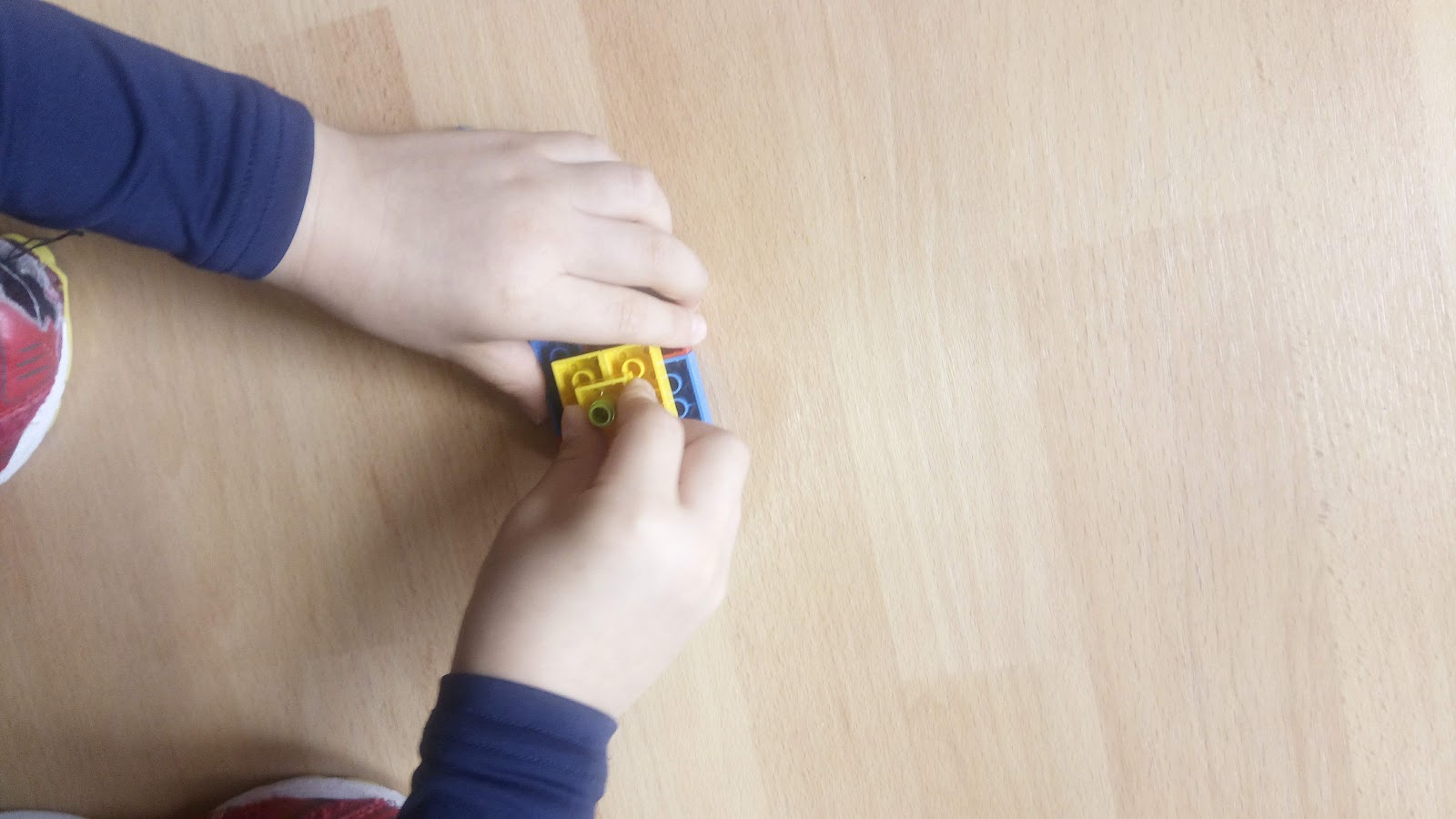
I thought making LEGO tops was the best activity of the week. It was an activity that was accessible to all students. 

After about 10 minutes, I had them stop to reflect on the steps they were taking, they came up with the following ...


plan 
find parts 
build 
play 
test 


The list had to be boiled down to this list, but they mostly used the words in their explanations. One thing I should try next time is to record (video or audio) these discussions we have.


We met to do a short reflection at the end of the activity where I wrote what they said on the board. I think my prompt was, "what did you learn?"

I am glad that one student picked up on my use of the word improve.


Saturday, February 17, 2018

Choices and Consequences: A Provocation


When thinking of a provocation I could use for the Sharing the Planet unit, Resources, with the Central Idea, "Access to resources is shared and limited leading people to make choices", I wanted to offer my students the experience of making choices and understanding the consequences of their choices.

The Writing Workshop connected to the unit is on opinion letter writing, so to create a connection between the writing and the unit concept I created an island. Of course, someone from that island had to send them a letter inviting them there.

The students had a lot of questions, and I did not have the answers, so they had to write back to the man on the island and try to get the answers.

After another round of letter writing, we brainstormed what resources are and what resources might be on the island. The students started populating the island with resources until there was a good-sized forest with animals, a river, and a lake.

One student said she needed a house if she were to live there. So I handed out some paper in three sizes and the students could choose the size of there house. After choosing, they built themselves houses and could choose where on the island they would like to live.

After the houses were up, I started cutting trees in half which had all the students shocked and asking questions.

Why are you cutting so many trees?

What they didn't know was that each house size had a point value. All but two students opted for the largest size house, so that turned out to be a lot of cut trees.

The experience gave the students a chance to ask a ton of questions and discuss what had happened. I think it also gave them the kind of shock to the system that gets them thinking about what we are learning.

In her book, The Power of Inquiry, Kath Murdoch has an awesome table titled WHAT DO INQUIRY TEACHERS DO? Starting my current unit, help students make connections between ideas and using authentic contexts were two strategies that I thought I could use.


A post shared by Thomas Hammerlund (@thomashammerlund) on


Sharing the planet
An inquiry into rights and responsibilities in the struggle to share finite resources with other people and with other living things; communities and the relationships within and between them; access to equal opportunities; peace and conflict resolution.

An inquiry into rights and responsibilities in the struggle to share finite resources with other people and with other living things; access to equal opportunities; peace and conflict resolution.


Resources
resources, equality, access
Natural resources contribute to meeting the needs of living things (Function)
access to resources around the world isn't always equal (perspective)
Living things compete to share natural resources (Connection)
Balanced, Reflective,
function, perspective connection

SMS: codes of behavior; informed choices, Healthy lifestyle
SS: resolving conflict,
TS: Acquisition of knowledge, Comprehension, Analysis, Evaluation, Dialectical Thought
CS: listening, speaking
RS: Formulating questions, Observing

Appreciation, Empathy, Integrity, Independence

Sunday, May 31, 2015

A Nice Suprise

a former student holding up a book we made when he was in first grade
Last week I was went to the Grade 3-4 room either to get something, or to see what they were doing, and happened to enter the room with some papers. One paper had my current unit on it, and one observant girl recognised the unit and said she enjoyed that when she learned it. She said she remembered the book we made. Just then the boy sitting next to her said he still had the book, and the next day he brought it in.

That "book" began as a presentation to allow students to show their knowledge and understanding. During the project though, I felt that the technology got in the way of learning, and it became more of a "Google Slides" project than a "demonstrating what we know about rice" project.

That was a lesson for me that has aways stuck when I consider implementing technology into my lessons and I am grateful for having learned it the hard way.

Having the students remember the book, and knowing some kept it felt good though. It doesn't change how the project went, but I feel better knowing some still had it around to use as a future reference.

Saturday, September 27, 2014

This Is Disgusting ... But It's Fun

I walked into the PTA room the other day and saw a garbage can overfilled with all kinds of garbage in mixed together. On top of it all were a few plastic bottles and I thought, we need to get in this garbage. I took the garbage out of their room, and brought it into my classroom one afternoon.


The next morning when the students came in, they saw the bag of smelliness in the front of the classroom.

Why is that in here?
What is that?
Who forgot their garbage in our classroom?

I was asked a flurry of questions, but before answering them, I asked them what they saw.

Garbage!
Trash!
Junk!

Then I asked them again to look closer, and to find a partner and do a Think, Pair, Share.

From this, I started getting observations about the plastic bottles, recycling, and someone may have seen a piece of paper in there somewhere.

Then I asked what we could do about it. Someone said we should recycle the bottles. So I asked about the paper. They agreed we should recycle that too. I told them that we still can recycle some of this "junk" and I passed out some plastic gloves. (Ironic, I know.)

We went into the school's entryway where all the hallways come together. It is a large area with ceramic tile floors that can be easily cleaned if need be. 

I passed out some clipboards so they could write t-charts onto some (already used on one sided) paper. Their charts were separated into a G for garbage, Pl for plastic, and Pa for paper. The students took turns coming up and digging into the garbage and deciding which bin to put it in.

There were plenty of "EEWWs" and "OHs" during this process. I am sure that most classes heard some of this.


Soon we had the garbage separated and a pile of data. Then it was off to lunch.


When they came back from lunch, we set out using the data to make bar graphs so we could get a picture of what kind of trash we separated.

The next step in this inquiry is to write letters to the PTA to ask them to be careful about what they throw away. I am also going to stress to my students that we need to also help them, so we may ask the headmaster to give the PTA two more bins so it is easier for them to recycle.

I just thought of this, but we could also make some posters of the kinds of things they can recycle to hang in the PTA room.


*The title is a quote from one of my students during the garbage sort.

Sunday, September 21, 2014

Tracking Understanding


Since this was the second time I was teaching these units as a Grade 1-2 teacher [on a two year cycle], I wanted to change the order in which I taught them. Two school years ago, I taught our current unit, Sharing the planet: An inquiry into rights and responsibilities in the struggle to share finite resources with other people and with other living things, at the end of the year. This time, it is in the beginning.

In my classroom I have a large basket filled with scraps of paper to be used in future projects. This was a great chance to ask my students why I would have a box of paper scraps in my room. After our discussion, I put them to work making their own self portraits using the scraps of paper.

After we were done I had all these self portraits that I was planning on simply displaying. But when I put them up in a row, I noticed I could have them talk to each other. 

This evolved into a way to track student understanding through our unit. I created speech bubbles that are big enough for post-its, and periodically, I ask the question, "What do you know about our unit?"

Each time we talk about it, I put their answers into a unit page in their portfolios so we can see how they grow in their understanding and knowledge.

This might be a good opportunity next unit to develop a rubric about conceptual understanding.

Monday, June 16, 2014

Continental Draft

A while back at one of our school's PD days I was introduced to a video call Austin's Butterfly Drafts.

This video shows the power feedback and how students can improve through the feedback cycle.


We are in how we organize ourselves unit we are studying communities and I found an opportunity for the students to use each others critiques to make their original map better.


The students are reading a book called Me on the Map. We are making a flip book based on Me on the Map that starts as continent and moves to country, city, street, house and down through the layers to the students own bedroom.

Yesterday I had students draw a picture of Asia. I did project an image of it and passed out some iPads so that they could have the image to look at while they drew.

Some students surprisingly could do a really good job, and others were rather lazy with their drawings and could clearly improve.


Today I showed the kids the video about Austin and we talked about how they could improve their own work. Students were very interested to try it out.

Since it was their first time doing this activity, and we did this as a whole class instead of breaking into smaller groups it took a long time. They were all very interested in helping others, however they were not so interested in hearing critiques from other students. I had to keep reminding them that this was for their own benefit.

However when it came time for the students to do their second draft of Asia, they were much, much better.

This lesson took more than an hour, however it was well worth the time. I'm hoping that this lesson will help them think about how they draw their subsequent drafts, and maybe it will seep into how they think about all their work. We will have to do this more often though so it becomes engrained into their thinking.

There was one boy who I actually think did not do as well the second time. That might be because his first draft was so good.

Thursday, June 12, 2014

SECRUOSER - A Natural Resources Adventure Role Play

Our Planet Earth

The decisions we make can affect the planet.


1. The extraction and use of natural resources.
2. Current environmental issues in Japan and the world.
3. Responsible decision making: exploring the difference that we can make.


When I saw natural resources, my thoughts drifted back to my first year working at TIS. At that time I was teaching PE, and I would drift in and out of classrooms when I could, and I remember very clearly seeing a bulletin board with trees on it, then a few weeks later the trees were cut in half. When I asked about it, the Grade 3-4 teacher told me they were learning about resources and he used that as a kind of role play.

Fast forward to this year and I was faced with a natural resources unit, so I decided to give it a shot.


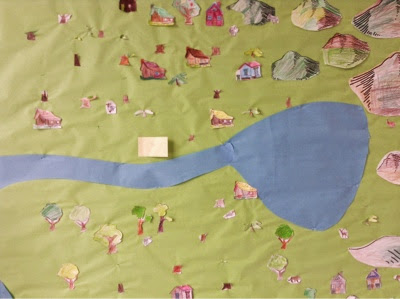
The yellow boxes show where the students wanted to build houses.

I first set the landscape. I created an area modeled after Miyagi, Japan (where we are). I first talked with the students about the different features of the landscape. We talked about the trees, the water, the animals, and the mountains and the possibility of minerals in them (thanks to Minecraft). I told them that the name of the land was SECRUOSER. I intentionally wrote it next to the word resources to see if anyone would get it, and one astute student did. Now I wish I had left that nugget for later.

Next I had the students scout out their homestead. They each came up to the board and pointed to where they wanted their house. Several students placed their homes close to each other in the upper part of the board.

Surprisingly only one student chose a place on the lake shore. They don't know what they are missing.


An explanation about the placement of a house.

Many students chose to build away from the coast of the ocean and away from water as well citing tsunamis. Other students talked about floods and introduced words like "avalanche" and "landslide". Natural disasters were a huge influence on their decisions.

I wonder if this is because of Japan, the March 11, 2011 earthquake, or if it is just their age.


SECRUOSER after the purge.

I then found some house cutouts. I showed the students each one and assigned them a tree value. There was a grass house that cost one tree, a stone house that cost one tree, a few that cost two, and one that cost three.

The students were so excited to get their houses and color them. Little did they know what was in store for them.

All trees and houses for this board were made using scrap paper.

Each time I put up a house, I cut that many trees from the board, but I left stumps so they could see what was happening. This is what caught their attention. When I cut the first tree there was a silence in the room that told me the shock helped them realize that the decisions they had made had consequences that they could not get out of.

I went to all the students collecting houses, and when I did, I asked the class how much the house cost. I then told them that if you were to build a house, and had no vehicle, you would cut the trees closest to where you lived.

The boys who moved next to each other found that when humans get together there will be a large hole in the forest. In our land area the whole forest north of the river was ravaged. The students who chose stone houses saw parts of mountains taken out.

One student was so excited he brought his mom into the room and told her all about what happened.

Next chapter: What happens to the animals? OR When beavers strike.

Sunday, June 9, 2013

"It was hard, but fun."

For our current unit about ecosystems and rice, I had the students make a presentation using Google Slides that we will print and put together as a book.

I made the slides for the students. I put the titles on them and asked them to find a picture for each one. I then showed the students my example book that I made, with the same slides as they had, and I showed them how to locate legal images through Google Slides and showed how to cite their sources.


Most students caught on quickly to this. One of the hardest parts for them, which is hard for any new user to Google Slides, is the way the invisible boxes work. Many of them got stuck when they tried to select their text, but an invisible text box was covering it up and they could not do anything.

The next step for them was to add text. This unit I used some paper books I got from Scholastic and the idea was to use that as a guide.

Of course there were some students who got stuck with this too. Before we started I put the students into teams to help each other, but some students got so focused on what they were doing, it was hard to pull themselves away. So for those who needed the help, I gave them some cloze sentences.

This book is from one first grader who erased all the slides I made. After he finished I saw that not all the citations made it to the slides.


When I asked the students after they had printed their books if they liked doing this, they said they did, and one student said, "It was hard, but fun."

Another student taught me that you can adjust the transparency of the color of the text box. That was a lot better than the way I was doing it [and the way I showed them]. I had told them to I can learn too you know.

Break it down
While I saw a lot of good tech and design learning happening (not to mention great peer mentoring), it took several class periods to finish. This was at a time when many were being taken with school functions. It got me thinking about what I should have done.

I could have broke this down more for them. Instead of saying, "Here we go, do this", I could have done one slide a week in the unit.

Week 1 - cover page and a breakdown of the central idea
Week 2 - slide/page on plant parts
Week 3 - page about the plant life cycle
Week 4 - page about animal life cycle
Week 5 - page about rice field food web
Week 6 - page about how rice gets from field to table

I imagine the book being the assessment of what we learned. If we worked on it midweek, I could also use it as a formative assessment.

Could the summative assessment be ongoing like this?

Sunday, April 7, 2013

What's Your Recycling Wish?

When we started this unit, I was thinking big. I really wanted the students to know where our garbage comes from and I wanted them to see that humans waste too much.

I was thinking of actually dissecting a garbage bag. My plan was to dump out a bag of garbage from my own home and sort out the contents. I imagined my kids categorizing everything as they rummaged through the waste. I imagined us going out to the blacktop outside where we have recess and making a huge circle in chalk. My students would tally and sort the garbage, then at the end, we would make a glorious pie chart.

It never came to be.


I consulted with our Kindergarten teacher (the best Kindergarten teacher you will never know) and we came up with a different plan.

I made these sheets that I put above our waste and recycle bins. The garbage bin has a picture of a landfill on it. Each week, every time someone throws something away, the students make a tally mark.

Above the recycling bins, I have different pictures of possible products that can be made. The students make a tally next to the picture of the product they would like to see made.


Putting it Into Practice


Last week the teachers did some spring cleaning around the school and we are in the process of throwing away a lot of junk that has collected.

I was able to take them to the garbage piles and I planned on discussing the importance of reducing what we use. Instead, we had conversations about how we could reuse the garbage.


Then in our elementary assembly we were discussing the environment. I was very proud of the answers the students gave at our last elementary assembly. A few of them showed that they have a firm grasp on the big concepts of our unit.

Monday, March 4, 2013

The Sort of Learning

One of the first activities I did with my students in our current unit, Light and Color, was to have them sort different objects. My idea was to have them be sorted by opaque, translucent, and transparent objects. As with any good sort, they came up with categories I did not even think of.

Tuning In through Sorting Objects

I love sorting activities just for that reason. I never know what will become of it.

Wednesday, February 13, 2013

Teachable Tangents

We were just starting a lesson in writing last week when I was eliciting ideas from my students.

"Tell me something about colors," I said.

After a few responses, someone said, "we can't see without them!"

Another student had remembered a comment I made earlier in the unit about not being able to see without color and jumped on the opportunity by yelling out, "that's not true!"

Hearing this I decided to ask them how they can find out if it is true or not. So I posed the question, "how can we find the answers to this and the other questions we have asked in this unit so far?"

I gave them each a sticky note and let them jot down their ideas.

I really enjoy taking these tangents as we go through our learning journey. It is nice to be able learn in an almost seamless way.

Tuesday, February 5, 2013

A Student, An iPad, A Softbox, and A Mentor

With the Grade 5-6 class down the hall studying Light and Sound, and my Grade 1-2 class studying Light and Color, there was bound to be some collaboration. Mr. Dwyer and I made plans to do a class exchange for a day.

But when I saw the self portraits his students did with the iPads, I wanted my students to do the same thing. It seemed like a good peer mentoring opportunity.

With the student numbers in our classes, there was one unlucky Grade 5 student who was paired with me. Photography is a hobby of mine, so I have been thinking about the kind of self portrait I want to have for a while. So I showed a portrait in the style I was thinking of and took my budding photographer down the hall to a room with few windows. The school soft boxes just happen to be stored down there.

I explained to him that we needed to look around the room for a spot with an uncluttered background. There wasn't really a good place, so I told him if the light is strong enough on the subject, the background will be dark.

His first few shots were throwaways. The first two were too bright, so we moved the light away. The next step was to move him and the iPad closer to me to make more prominent in the frame. One common mistake people make when shooting is to have the subject too small. Fill the frame they say.

Finally he added a monochrome filter and added a border to the shot and we were done. After he sent the picture to me I cropped it down.

Not bad for an iPad 2.


Thursday, December 6, 2012

Planting the Seeds

One thing I want to do more of is cross-unit projects. I would like to start a project in one unit, and be able to use the same thing for further learning in the next unit.

Act 1
Way back in September I had my students try something I knew way way over their heads, but I wanted to see how they would tackle a challenge. I asked them to make a sphere with these geometric shapes I have.

All in all they did a good job. After all, they are only in first and second grade.

The first group was generally in going in the right direction by making a box-type thing. Their problem was that it was too heavy and kept falling in on itself.


The second group started making their sphere using hexagons using the theory that the hexagons were close to circles. (I was hoping they picked them because soccer balls have hexagons on them.)

This group ran into the same sides-were-too-heavy problem that the first group I described ran into, but they got to that point faster than the other group. At this point I asked them what was wrong - the sphere keeps falling down. So I asked them what would help them. they didn't know so I suggested toothpicks.

As I was talking to my coworker about what was going on in my classroom, he suggested making a geodome with newspaper rolls.

My next math unit became geometry.


Act 2
From the seeds of the sphere challenge came a grander project. In our geometry unit, one of the projects of inquiry was to make the geodome. We were able to measure, find out that a triangle is indeed the strongest shape, collaborate, and accomplish something.


Act 3
After that was finished I had this huge structure in my room. One student suggested to make a house, but today, it was used as a prop in our play The Three Little Pigs.


Not exactly the type of connection I am looking to make, but it was good to have.