Showing posts with label Reflection on Learning. Show all posts

Tuesday, July 7, 2020

Time to Daydream

Photo by Mathew Schwartz on Unsplash
Motivations

I am currently taking a course on Coursera called "Learning How to Learn: Powerful mental tools to help you master tough subjects". I tried taking this course a few years ago and I didn't make it all the way through. I find there are times when I spend more time and energy learning than I should be, so I wanted to take another shot at this course. Another reason for taking this course is that one of the G4 units we teach is on learning so I thought this would be a good way to learn about learning for that unit.

One of the techniques suggested to help make connections is called "retrieval practice". It was suggested that taking time to review what you have learned can help make connections and strengthen an understanding of the ideas you learned.


Connections to the curriculum

This would be an awesome course for students to take as a mini-unit and could be connected to Math with Jo Boeler's YouCubed. Jo Boeler talks a lot about a growth mindset and understanding that to become better at math students should focus on trying to get better; reflecting on the process, and looking for alternate ways to solve problems.

I could imagine spending the first two weeks of school working through the Learning How to Learn course and the YouCubed week of inspirational math curriculums in tandem.

Connections to the school schedule

I wonder if there could be a time in the school day when students could just daydream. The benefits of daydreaming at work have been recorded, and even this course recommends reflecting on what you have learned to make connections.


I wonder
Would a podcast be another way for me to reflect?


Sunday, June 3, 2018

Waiting for them to Be Ready

Our current unit in Where We are in Time and Place has us looking at innovations and discovery.

This unit I held back the poster with the central idea, instead, wanting to see if my teaching was leading them to their own conclusions. This is not revolutionary, but I haven't done it much this year.

I have been waiting for them to be ready.

The first week of the unit saw us making and testing paper airplanes, looking at the history of different things (cars, airplanes, bicycles, toys - we started with airplanes), trying to make sense of data we collected, and making tops.


Note: I happened to use the airplane video because there were many questions about how airplanes worked. I fell into the trap of misleading students and then having it snowball by students becoming interested and asking questions, eventually ending up off track. This reminds me to be more careful with provocations -- or at least to do a more thorough reflection afterward. Still, part of me thinks it is OK to be off track as long as the students are thinking and wondering.

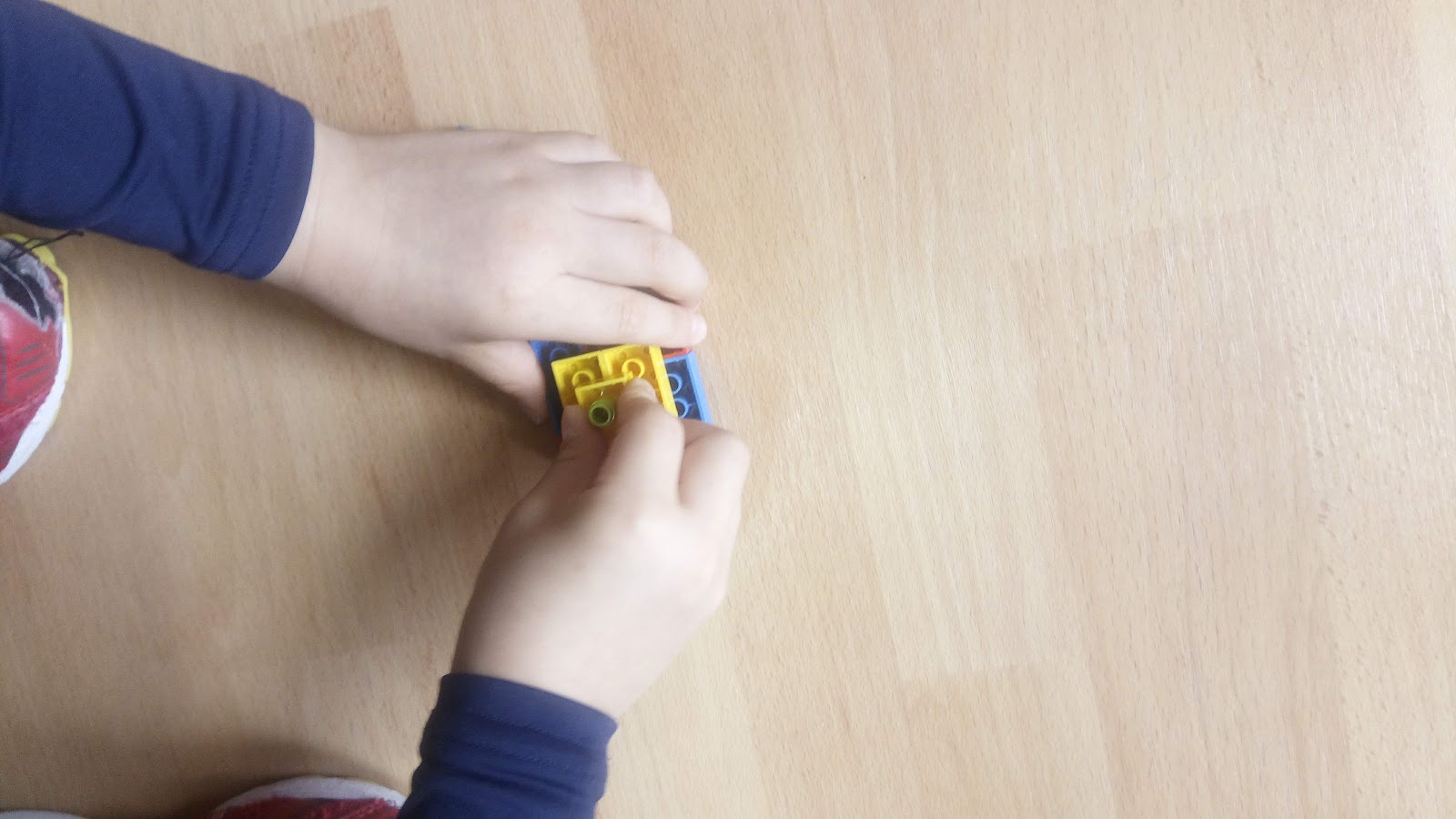
I thought making LEGO tops was the best activity of the week. It was an activity that was accessible to all students. 

After about 10 minutes, I had them stop to reflect on the steps they were taking, they came up with the following ...


plan 
find parts 
build 
play 
test 


The list had to be boiled down to this list, but they mostly used the words in their explanations. One thing I should try next time is to record (video or audio) these discussions we have.


We met to do a short reflection at the end of the activity where I wrote what they said on the board. I think my prompt was, "what did you learn?"

I am glad that one student picked up on my use of the word improve.


Wednesday, May 31, 2017

Bringing Apple Teacher to KAS


When I heard about the Apple Teacher program, I was interested and went to apply. Unfortunately, my Apple ID is registered in Japan, and Japan was not one of the countries where the program was available. So, I decided to make a new Apple ID and I took the Apple Teacher Certification.

I have gone through several tech certifications and after each one, I kept thinking how much better each would be if teachers got together and went through the certification together. I am not talking about the test, but rather the training that most certifications have to study for the test. I could see that some interesting conversations could come out of sharing experiences with each other.

We tried this at KAS with the Tech Ambassadors this year and it was awesome. One takeaway I had was to use Keynote's Instant Alpha for greenscreen images.

Apple's Planning Guide


Saturday, February 11, 2017

Design a Flag

In the end, we teachers are really just salespeople. If the students aren't interested in what they are learning, it is harder to motivate them to learn. But when students are eager, there is no stopping them.

In our MYP Design course, we aim to push students to use authentic clients. When they have an actual client, the whole design process is actually easier for them since they are able to discuss what the client wants.

A few student-created flags. Can you guess where they are from?


In the beginning of the year, we used design scenarios - one of which being a Design a Flag scenario I adapted from a 99PI episode on flag design. (And looking at it again, I forgot to have them first design a one-by-one-and-a half inch flag. Note to self.)

Some students did pretty well, but those who weren't interested were lost through the whole project.

Next time ... 
Reflecting on the unit, I wonder how it could have been made more engaging. Could I have had all them make a flag for the country, city, family (clan), or the school? That way they could brainstorm and draw inspiration from each other as well as share research. This feels like something I would do in elementary school, though.

If I were to try this project again, I might use 99designs.com. They have design projects that might be good for students to follow the design process when someone has written out the directions beforehand. It also gives them an authentic chance to design for a client.

Also, I forgot that it is recommended you design your flag on a 1" by 1.5" rectangle. That way you can judge how it might look from a distance and keep the objects simple.